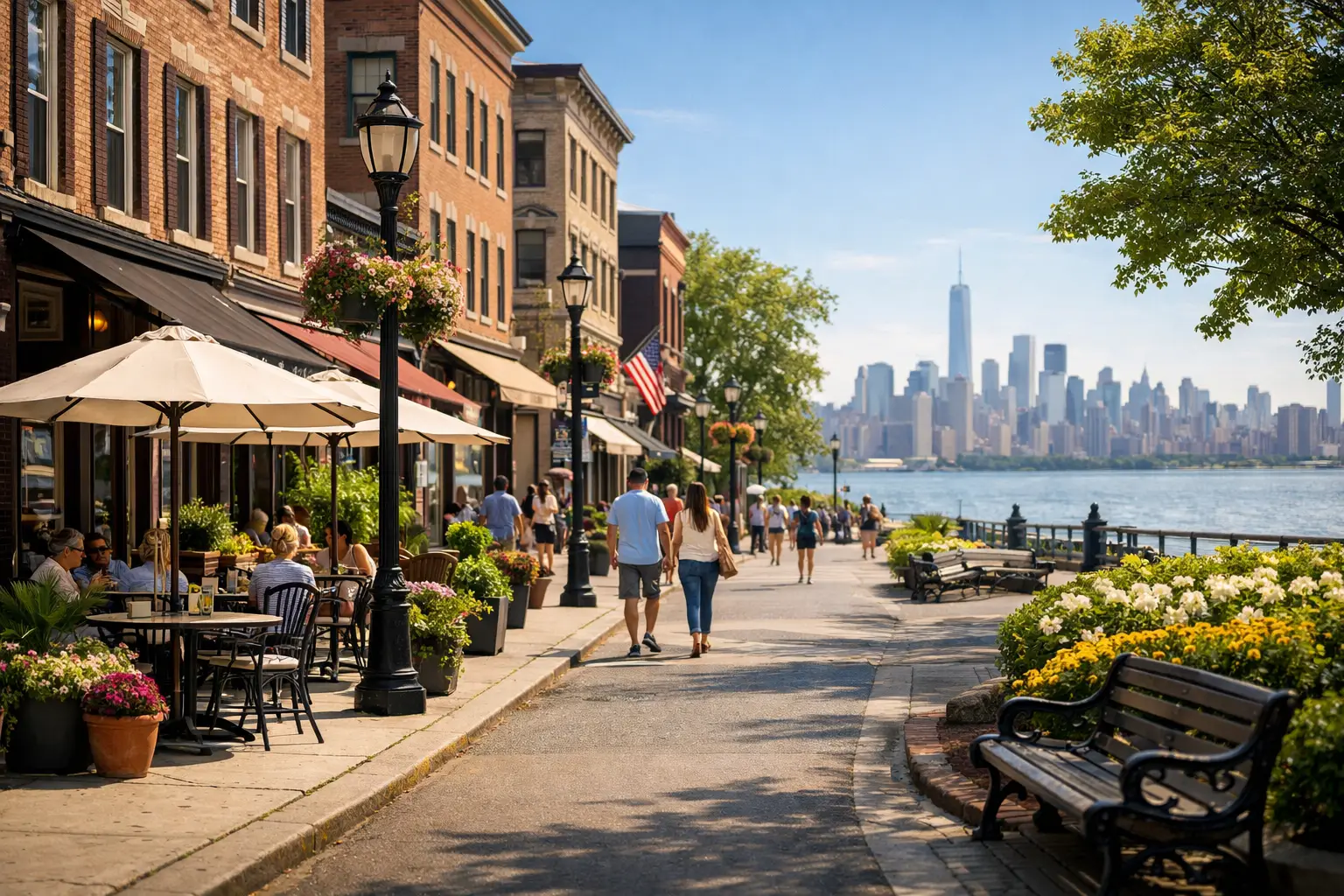
A walkable town changes the daily math of owning a home. Instead of driving for coffee, a train, a pharmacy, dinner, or a school event, many of those errands are within a few blocks. The best walkable towns in New Jersey combine a real downtown with nearby homes, but the right choice depends on budget, commute, household needs, and how much activity you want outside the front door.
Walkability is not just a charming Main Street. For buyers, it means sidewalks that connect neighborhoods to stores, parks, transit, and services. For sellers, it is often a feature worth highlighting because it gives a property value beyond its square footage.
What Makes a New Jersey Town Truly Walkable?
A town can have excellent restaurants and still be difficult to live in without a car. The strongest walkable communities usually place residential streets close to a downtown, have a train station or reliable transit option, and offer practical destinations such as groceries, banks, schools, parks, and medical offices.
The trade-off is usually price, space, or both. Homes close to a lively center may have smaller lots, older layouts, tighter parking, and more street activity. A buyer who wants a quiet cul-de-sac, a large garage, and a short walk to a downtown may need to compromise somewhere.
12 Best Walkable Towns in New Jersey for Homebuyers
1. Metuchen
Metuchen is one of the most practical choices in Middlesex County for buyers who want a walkable downtown and rail access. The compact center around Main Street and the train station includes restaurants, coffee shops, everyday services, and community events. Many residential streets are close enough for a reasonable walk to downtown.
Housing includes older colonials, capes, renovated homes, and some newer condominium options. Demand can be strong, especially for homes near the station. Buyers should look closely at parking, lot size, renovation quality, and train noise before deciding how close to downtown they want to be.
2. Princeton
Princeton offers one of New Jersey’s most recognizable downtown settings. Nassau Street and the surrounding blocks provide bookstores, dining, cultural attractions, parks, and a dense mix of local businesses. It is a place where walking can be part of the normal rhythm of the day rather than an occasional weekend activity.
The market is expensive, and buyers should expect competition for homes near town. Princeton is a fit for those who value access to amenities, a strong sense of place, and proximity to the university environment. It may be less suitable for buyers seeking newer, larger homes at a modest price point.
3. Montclair
Montclair has multiple commercial districts rather than one small downtown, giving residents many options for dining, shopping, fitness, arts, and transit. Its village-like streets, mature trees, and broad housing selection attract buyers looking for a more urban-suburban setting.
That variety comes with higher costs and a faster pace than many suburban towns. Some homes are walkable to one district but not another, so buyers should map their actual routines rather than assume every Montclair address offers the same experience.
4. Westfield
Westfield’s downtown is polished, active, and convenient, with restaurants, retail, services, and a train station nearby. The residential areas around the center are well established, and the town appeals to buyers looking for classic homes with a clear connection to downtown life.
Prices and property taxes can be significant. Still, for a buyer who values a well-kept downtown, local events, and access to everyday needs on foot, Westfield remains a strong choice.
5. Cranford
Cranford has a walkable center with restaurants, shops, and access to the train station, along with a scenic setting near the Rahway River. It often appeals to buyers who want a lively but less intense alternative to larger North Jersey downtowns.
Flood risk deserves careful attention in certain areas. A home can be close to downtown and still require a detailed review of flood history, insurance requirements, and drainage conditions. That due diligence matters more than a quick impression of the neighborhood.
6. Morristown
Morristown feels more like a small city than a traditional suburban downtown. It has a deep restaurant scene, entertainment, professional offices, historic sites, and train service. Condominiums and apartments near the center can be especially appealing for buyers who want less exterior maintenance and easy access to activity.
The energy is a benefit for some and a drawback for others. Weekend noise, traffic, and parking are real factors near the most active blocks. Buyers who want a quieter setting should look just outside the immediate downtown while checking walking routes carefully.
7. Red Bank
Red Bank offers an active downtown near the Navesink River, with independent stores, restaurants, theaters, and a train station. It has a distinctive coastal-town character without being solely a seasonal destination.
Housing ranges from historic homes to townhomes and condos. The best fit is often a buyer who values dining, arts, and waterfront access. Pricing can vary sharply by location, condition, and proximity to the river, so comparable sales should be reviewed block by block.
8. Hoboken
For buyers who want dense, everyday walkability, Hoboken is hard to match. Groceries, restaurants, parks, waterfront views, transit, and services are woven into the city grid. Many residents can handle much of their routine without using a car.
Space is the major compromise. Buyers may find smaller homes, limited parking, higher association fees in some buildings, and less privacy than in suburban communities. It is an excellent option for someone who prioritizes convenience and transit access over a large yard.
9. Jersey City
Jersey City has several walkable neighborhoods, particularly Downtown, Paulus Hook, Hamilton Park, and portions of the Heights. It offers a broad selection of condos, brownstones, restaurants, parks, and PATH access for Manhattan commuters.
The city is not one uniform market. A building’s location, monthly fees, tax history, amenities, transit access, and parking can affect value substantially. Buyers should compare neighborhoods based on their actual commute and preferred day-to-day environment.
10. Somerville
Somerville’s downtown has grown into a strong destination for restaurants, local businesses, and community events. Its NJ Transit station and compact core make it appealing to buyers who want a central New Jersey location with a genuine Main Street.
The town offers a range of older homes and newer residential options. Buyers should consider how close they want to be to downtown events, as activity can bring more visitors and traffic during busy times.
11. Maplewood
Maplewood has a compact village center with restaurants, shops, services, and a train station. The town’s older housing stock and community character draw buyers who appreciate established neighborhoods and a downtown that supports daily life.
Homes near the village can command a premium, particularly when they are renovated and within walking distance of transit. Older homes also require buyers to pay close attention to roofs, electrical systems, heating, windows, and deferred maintenance.
12. Collingswood
Collingswood, near Philadelphia, is known for Haddon Avenue, a lively corridor with restaurants, shops, and community events. The PATCO station adds a major advantage for commuters who want access to the city without giving up a neighborhood setting.
It can be a good match for buyers seeking a more approachable alternative to some North Jersey markets. As with any older walkable town, house condition matters. A lower purchase price can be offset by renovation needs if inspections reveal major updates ahead.
How to Compare Walkable Towns Before You Buy
Start with a simple test: visit the property on a weekday and walk the route you expect to use most. Walk to the station, grocery store, school, park, or coffee shop. Pay attention to sidewalks, traffic crossings, hills, lighting, and how the area feels after business hours.
Also separate lifestyle walkability from commuter walkability. A home may be close to restaurants but far from the train. Another may be near transit but outside the practical walking range of downtown. Both can be good homes, but they serve different priorities.
For sellers, walkability should be described specifically. “Near downtown” is less useful than stating that the home is within walking distance of the train station, park, restaurants, or local services. Clear details help buyers understand the daily value of the location.
The best choice is the town where your real routine works well, not simply the one with the busiest downtown. A thoughtful visit, a realistic budget, and a close look at the block can make the difference between liking a town and feeling at home there.
Leave a Reply